If you’ve ever worked with LPG systems, you’ve probably wondered about the tiny, easy-to-overlook parts that keep everything running safe. As someone who’s been a supplier of LPG reducers for over 12 years, I get a ton of questions about this: does the reducer need special ventilation? Let me break this down straight, no jargon, no vague industry fluff—just what actually matters for your setup. LPG Reducer
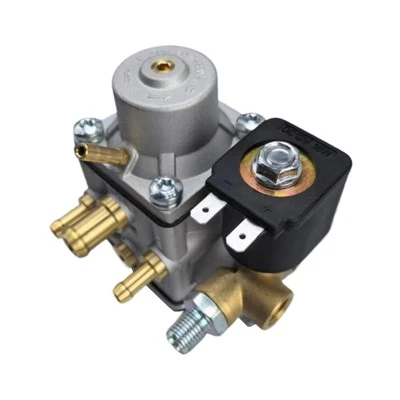
First, let’s keep it simple: an LPG reducer’s job is to bring high-pressure gas (straight from your LPG tank, which can be up to 250 psi for a refillable propane tank, or even higher for some commercial versions) down to a usable, low-pressure level—usually between 7 and 14 inches of water column, depending on if it’s for a home stove, forklift, or commercial generator. That pressure drop isn’t just a mechanical trick; it creates a little bit of heat transfer, but also a tiny amount of gas leakage risk if there’s a seal fault, loose fitting, or regular wear and tear.
Here’s where ventilation comes in, and why it’s not just a “nice-to-have”—it’s a must. LPG is heavier than air, right? That’s a fact most people mix up with natural gas, which is lighter. LPG (propane specifically) is about 1.5 times heavier than air. So if a small amount leaks from your reducer, it doesn’t rise and dissipate like natural gas—it sinks into low spots: under a workbench, inside a cabinet, along a floor, or even in the cavity under a mobile home’s floor. That’s a big problem because LPG is flammable between 2.1% and 9.5% concentration in air. A single pinhole leak from a reducer can build up to that explosive concentration in minutes if there’s no airflow to move it along.
I’ve seen way too many small business owners cut corners here. Last year, we got a call from a guy who runs a fleet of delivery vans—he’d installed new reducers on all his forklifts and tucked them tight against the frame rail, right in the wheel well, because he thought it would protect them from road dirt. Six months later, one of his drivers smelled gas, but the alarm only went off because the vehicle’s fuel system had a secondary sensor. The reducer had a tiny crack from vibration, and the LPG was pooling in the wheel well. If that driver hadn’t noticed, it could have ignited from a hot exhaust manifold. That’s exactly why ventilation isn’t optional—especially for mobile setups, which have constant vibration that wears seals faster, and tight, enclosed spaces.
Now, let’s get specific about what kind of ventilation actually works, and what’s useless. A lot of people think just leaving a door or window cracked is enough, but for enclosed spaces (like a commercial kitchen, a generator room, or a fixed tank setup in a shed), you need intentional, cross ventilation. For fixed installations, NFPA 54 (the National Fuel Gas Code, which is the standard we reference on every reducer spec sheet) requires two ventilation openings for spaces where LPG equipment is installed: one near the bottom of the wall (within 12 inches of the floor) and one near the top (within 12 inches of the ceiling). That’s because it creates a stack effect—air flows in the bottom, pushes any leaked LPG out the top, since the heavy gas will rise to the top of the enclosure when it builds up. A single vent halfway up? That does nothing. I’ve had a customer try that once, and we caught it during a pre-install check before he even fired up the system. We explained it to him, and he added a second vent—saved him from a potential disaster, full stop.
For mobile LPG applications—forklifts, delivery vans, RVs, anything that moves—ventilation looks a little different, but it’s still non-negotiable. You don’t want to seal the reducer in a tight compartment, but you also don’t want to leave it fully exposed if it’s going through rough terrain. The sweet spot is mounting it in a location that’s open to the air on at least two sides, or with built-in drain holes if it’s in a wheel well—so any leaked gas can escape through the drain instead of pooling. I’ve talked to RV technicians who mount reducers in the underbelly cavity, and they’ll drill extra ¼-inch holes in the cavity floor just to make sure there’s no pooling. That’s the kind of small step that prevents big issues.
Wait, can you over-ventilate? Rarely. The only time I’ve heard someone worry about too much airflow is in extreme cold environments. If you’re running LPG in a place where temperatures drop below -40°F, you might have to make sure airflow doesn’t get so strong that it causes the reducer to frost over, which can freeze the internal parts and make it stop working. But that’s a super niche case, and there are simple fixes for it—like adding a small heat shield around the reducer, or using a warmer-rated reducer for cold climates. That’s something we help customers with all the time when they order custom reducers for winter work sites.
Let’s also clear up a common myth: some people think “my reducer is UL-listed, so I don’t need ventilation.” UL (Underwriters Laboratories) tests reducers for safety, but their tests don’t account for real-world installation environments. A UL-listed reducer is safe when installed correctly, and part of that correct installation is making sure any potential leaks can dissipate. I’ll repeat that: no UL rating negates the need for proper ventilation. That’s a mistake we see all the time from people who just buy the cheapest UL-listed reducer they can find, tuck it in a closet, and call it good. It’s not.
Now, what about maintenance? Ventilation doesn’t stop at installation—you have to keep those vents clear of dirt, debris, snow, or cobwebs. Last year, we had a farm customer who had his LPG generator in a tool shed with two vents. He kept the vents covered with old feed sacks to keep mice out, and after a few months, the vents were completely blocked. When his generator started acting up, he called us, and we went out to check. We found a small leak in the reducer, and the gas was pooling in the shed because no air was moving. The leak wasn’t big enough to set off a gas detector, but it was concentrated enough that when we turned on a light switch (to check the wiring), it sparked—we only caught it because we brought our own gas sniffer. That was a close call, and it all came down to blocked vents. So ventilation isn’t a “set it and forget it” thing; it’s part of your regular maintenance check, right alongside tightening fittings and checking for cracks.
I get it—when you’re busy running a business, or maintaining your personal RV or fleet, it’s easy to cut corners on things like vents. But as someone who’s been selling LPG reducers for years, I’ve seen the damage that comes from skipping this step. It’s not just about following codes; it’s about keeping people safe. A reducer that’s ventilated correctly will last longer, too—because excess gas buildup or condensation (from trapped air) can corrode the internal parts, which leads to leaks. Proper airflow prevents that corrosion, so your reducer doesn’t fail early and save you the cost of a replacement.
So let’s wrap this up: yes, your LPG reducer absolutely requires special ventilation, depending on where you’re installing it. For fixed indoor or shed installations, follow NFPA 54’s two-vent rule: one low, one high, no obstructions. For mobile setups, mount it in an open, well-ventilated spot, don’t seal it in tight compartments. Never rely on ventilation as an excuse to skip regular maintenance, and don’t assume a UL rating means you don’t need airflow.

If you’re not sure what kind of ventilation you need for your specific setup—whether it’s a home heating system, commercial fleet, generator, or anything else with an LPG reducer—our team can help. We’ve worked with thousands of customers over the years, and we’ll walk you through the right setup, whether you need a standard reducer or a custom one for a cold climate or special application. Just reach out to us to talk through your needs, and we’ll make sure your LPG system is safe, compliant, and running smoothly.
LPG Reducer REFERENCES
NFPA 54: National Fuel Gas Code
Underwriters Laboratories (UL) Standard for LPG Pressure Regulators
Propane Education & Research Council (PERC) Safety Guidelines
Chengdu Xinbante Mechanical and Electrical Co., Ltd.
As one of the most professional LPG reducer manufacturers and suppliers in China, we’re featured by quality products and good service. Please rest assured to buy bulk advanced LPG reducer made in China here from our factory. We also accept customized orders.
Address: Industrial Zone, Longqiao Town, Xindu District, Chengdu City, Sichuan Province, China
E-mail: sales@cdxbt.com
WebSite: https://www.cdxbt.com/
