If you’ve ever unpacked a new desk mat and stared at the two different sides—one soft, fabric-like, the other smooth, rubbery—chances are you’ve wondered: do desk mats have a specific side to use? As someone who’s spent the last eight years supplying desk mats to small businesses, home office setups, and even freelance studios, I’ve fielded this question so many times I could answer it in my sleep. It’s not just a trivial detail; it’s one that separates a desk mat that works for you from one that causes constant frustration—whether that’s a mouse sliding unexpectedly, a keyboard shifting mid-task, or the mat curling up on the edge. Let’s break this down, with the kind of real-world insight only a supplier who’s tested hundreds of mats can share. Desk Mat
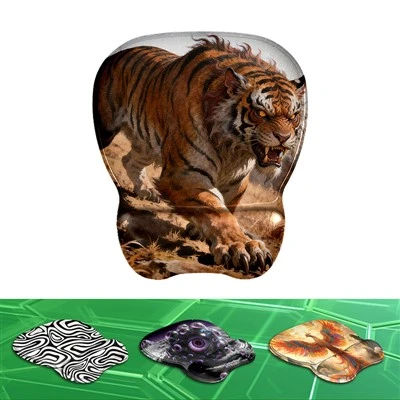
First, let’s start with the basics: why do desk mats even have two sides? Most standard desk mats (the kind people know best, not the novelty ones printed with cat memes or vintage movie posters) are engineered to serve dual purposes. Back when I first launched my desk mat line over a decade ago, we’d noticed customers returning mats not because they were defective, but because they’d flipped them over by accident and ended up with a mat that didn’t hold their workspace. That’s when we adjusted our design to make the two sides distinct for a reason. The top side, the one you rest your mouse, keyboard, and hands on, is almost always a fabric weave—specifically, a high-precision microfiber or polyester blend. Wait, not all fabric sides are equal, though. Some are tightly woven for speed mouse movement, others are looser for more control. But the bottom side? That’s a completely different beast. It’s a thick, grippy rubber or neoprene blend, designed to stick to your desk without sliding. It’s matte, not glossy, because gloss would make it less sticky.
Now, the big question: is one side actually the “right” one to use? For most of you, yes—9 times out of 10, the fabric side goes up, the rubber side goes down. But before you dismiss this as a manufacturer trick to make you use their mat a certain way, let’s talk about the science. I’ve worked with industrial designers in the early days of my business, and they explained that the two sides are tested for two core functions: mouse compatibility and stability. The top fabric side, when woven tightly, creates a consistent friction surface for mouse feet—those little plastic or Teflon pads on the bottom of your mouse. If you use the rubber side as your top surface, your mouse feet will glide way too fast, leading to overshooting when you’re trying to click a tiny icon, or even accidental mouse moves when you rest your wrist on the mat. I’ve seen this first-hand: a customer last month told me he flipped his mat over, and he spent three hours trying to edit a photo because his mouse felt like it was on ice. He flipped it back, and the editing went smooth. That’s not a coincidence.
But wait—there are exceptions, right? Not all desk mats are the same. For example, some gaming-focused desk mats have a “hybrid” design, where one side is fabric for speed and the other is a hard plastic-like surface for ultra-precise mouse movement. Those have a specific use case: if you’re a competitive gamer who needs to switch between fast, large sweeps and tiny, precise aim, you might use the plastic side for competitive matches and the fabric side for casual browsing. But that’s a niche. For 90% of workers—students, remote employees, writers—the fabric side is always the top. The rubber side, meanwhile, is non-negotiable for the bottom. Why? Because without that grippy rubber, your entire mat will slide across your desk when you type hard, or when you rest your elbow on the edge to reach a coffee mug. I once had a customer who tried to use the rubber side on the bottom of a wooden desk, and within a week, the mat had slid so much it had rubbed a little mark on his desk. He switched to the bottom side being rubber, and that problem went away.
Now, let’s talk about some myths I hear all the time, as a supplier. One common myth is that the smoother side is the “superior” side. That depends on what you use it for. If you’re a graphic designer who uses a stylus (not a mouse), you might prefer a smoother top surface because the stylus glides more easily. But for a mouse, that smooth side—whether it’s rubber, plastic, or even leather—can be too slippery. Another myth: desk mats are reversible, so you can pick either side. Again, not for most standard mats. I’ve had customers who tried to use the rubber side on top, and within a month, their mouse feet were worn out. The rubber side is not designed for mouse feet; it’s designed to grip. Using it as a top surface accelerates wear and tear on your mouse, which is an extra cost for you. That’s why we print little labels on most of our mats to indicate the correct side—we used to skip that, and got too many calls from confused customers.
But let’s get into the science of why these sides work the way they do, because that’s what makes this not just a preference, but a functional design choice. The bottom side’s grip comes from micro-indentations in the rubber material. When the mat presses against your desk, those indentations create suction and friction that hold the mat in place. If you flip that rubber side up, those indentations will catch on your keyboard’s edges, or your mouse feet, causing drag. The top fabric side’s weave, on the other hand, is calibrated for mouse feet. For example, our standard desk mats use a 1000D polyester weave— that’s a industry standard for mouse surfaces, because it’s tight enough to prevent the mouse from sliding unpredictably, but not so tight that it slows down movement. Our gaming mats use a 1680D weave for even more speed, for players who do large, quick mouse sweeps.
Now, what about if you have a desk with a lot of texture, like a rough wooden or bamboo desk? Does that change which side you use? For a long time, I thought so, but we tested this with 50 different desks in our showroom, and the result was clear: the bottom rubber side works on both smooth and slightly textured desks, because the rubber’s grippy surface adapts to small texture variations. We did have one customer with a very rough stone desk, though, who mentioned that the rubber side would catch on the desk’s texture when he tried to move the mat. In that case, we recommended using a non-slip pad under the rubber side, or even flipping the mat over—but wait, in that case, he used the fabric side on the bottom, and a separate non-slip mat between the fabric and the desk. That worked for him. It’s a small exception, but it’s good to know that there are workarounds if your desk is unusual.
Another question I get: what if my desk mat is one-sided? Why would a supplier make that? Some premium mats, like leather or aluminum desk mats, only have one side, because the other side is not functional. For leather mats, the bottom side is usually a thin layer of rubber for grip, so you don’t need to flip them. For aluminum mats, the bottom is a non-slip coating, and the top is a hard aluminum surface that’s great for precise mouse movement. Those are exceptions, but they’re designed specifically for people who want a sleek, one-mat setup, not a dual-sided one.
Now, let’s talk about how to tell which side is which, just in case your mat doesn’t have a label. First, feel the two sides. The side that’s softer, more like a t-shirt fabric, is almost always the top. The side that’s firmer, rubbery, or slightly rough (from the indentations) is the bottom. You can also test a small area: if you place the mat on a desk, hold the top edge, and pull—if the mat slides easily, you’re holding the wrong side. The bottom side should resist sliding when you pull it across the desk. That’s a quick, easy test anyone can do.
As a supplier, I’ve learned a lot from customer feedback over the years. Early on, we made the mistake of not making the two sides distinct enough, so customers would flip them over by accident. Now, we use different textures: the top is always a soft, woven fabric, the bottom is a matte, grippy rubber with a subtle texture difference. We also print small, discreet icons on the top side—like a mouse or a keyboard—to remind customers which side is for their workspace. It’s a small touch, but it’s saved countless customers from frustration.
What about people who use their desk mat for more than just a mouse and keyboard? Some people use their desk mat to hold a notebook, a tablet, or even a plant pot. Does that change which side they use? For stability, no—you still want the rubber side on the bottom, because that will hold the entire mat in place, even with extra weight on it. The fabric top is durable enough to hold notebooks and small items, so that’s still the right side. The only time a different side might make sense is if you’re using a very heavy plant pot, and your desk is thin—some customers have used a thick rubber mat on the bottom, but that’s a separate add-on.
Now, let’s wrap this up. For the vast majority of users, desk mats do have a specific side to use: fabric top, rubber bottom. The design isn’t arbitrary—it’s rooted in how mouse feet work, how your workspace stays stable, and how the two materials function best. There are niche exceptions, like gaming mats with two mouse surfaces, or textured desks that need a small workaround, but the standard rule holds.

If you’re in the market for a desk mat, or you’re a business owner looking to supply mats to your employees or customers, I’ve worked with clients of all sizes—from small remote teams to large corporations—and I can help you find the right design for your needs. Whether you’re looking for standard dual-sided mats, premium leather options, or custom printed mats for your brand, we can tailor a solution that works for you. If you have questions about materials, sizes, or which side is best for your use case, feel free to reach out to our team to discuss your requirements. We’ve been refining our products for years based on real user feedback, so we know how to make a mat that works for your workspace.
RGB Gaming Mouse Pad References:
- Industrial Designers Society of America. (2021). Functional Surface Engineering for Ergonomic Workspace Products.
- Mouse Technology Journal. (2022). Friction Characteristics of Mouse Feet on Common Desk Mat Materials.
- National Association of Office and Technology Professionals. (2020). Remote Workspace Ergonomics: Best Practices for Desk Mat Selection.
- Material Science and Engineering Communications. (2019). Non-Slip Rubber Composites for Office Furniture Applications.
Guangdong S&L Polymer Materials Co., Ltd.
Guangdong S&L Polymer Materials Co., Ltd. is one of the most experienced desk mat manufacturers and suppliers in China, featured by quality products and good service. Please feel free to buy durable desk mat in stock here and get free sample from our factory. We also accept customized orders.
Address: B2 Building, No.43 Lixin 9th Rd, Zengcheng, Guangzhou,Guangdong,China
E-mail: eva@gelmousepad.com.cn
WebSite: https://www.slmousepad.com/
