Hey there, if you’ve ever stared at a big, bulky bus cable and wondered how it actually connects all the dots (literally) to keep a transit bus running smooth, you’re not alone. As a bus cable supplier, I get asked this question all the time by bus techs, fleet managers, and even new installers who’re just figuring out their gear. Let’s break this down—no stuffy jargon, just the real, working parts that make those cables do their job. Bus Cable

First off, let’s ground this: bus cables aren’t your average extension cords. They’re built to handle way more—constant vibration from bouncing over potholes, extreme temps from 100°F summer asphalt to freezing winter roads, and enough juice to power everything from the starter motor to the Wi-Fi for passengers. So their connectors aren’t just random metal bits; each one is engineered to hold up to that abuse.
Let’s start with the most obvious one you’ll see first when working on a bus: lug connectors. These are the workhorses, plain and simple. They’re those flat, metal (usually copper, sometimes tinned to stop rust) ends that clamp right onto the battery terminals, starter, alternator, or the main distribution block. What makes them special? They’re crimped (not just twisted) and often soldered too, so they don’t come loose when the bus hits a speed bump or the driver slams on brakes. I see so many fleets cut corners here—twisting a lug on with pliers instead of crimping, and that’s how you get dead batteries at 5 a.m. before a school run. For big buses, we use lugs sized for 4/0 or 2/0 gauge cable, since those carry the heaviest current. If a fleet comes to us complaining about battery drain, 9 times out of 10 the lug connection is corroded or loose.
Next up, Deutsch connectors. You’ve probably seen these on all sorts of automotive and industrial gear, but they’re everywhere on modern buses. They’re that plastic, multi-pin connector—usually gray or black, with a little locking tab—used for smaller wires: sensors, lighting, dash controls, and the engine management system. The cool thing about Deutsch connectors is they’re sealed, so they keep out water, dust, and road grime. No one wants a sensor failing because a little rain got into the connection, right? A lot of our customers ask for custom Deutsch connectors when they’re upgrading their bus’s lighting or adding a backup camera. We can crimp them to exactly the right length, no extra wire hanging around to get caught on bus parts.
Wait, let’s not forget Metri-Pack connectors—these are the smaller, lighter cousins of Deutschs, usually for low-voltage stuff like interior lights, USB chargers for passengers, or the audio system. They don’t carry as much current, so their pins are thinner, and they’re usually color-coded to make installation easier. Like, red for 12V power, black for ground, yellow for accessories. I’ve had new installers mix these up once or twice, and suddenly a USB port stops working because they put a ground wire where the power should be. Oops. That’s why color coding is key here.
Another big one: bulkhead connectors. These are the ones that go through the metal bulkheads of the bus—like the firewall between the engine and the passenger compartment, or the side panels where wires run from the front to the back of the bus. They’re designed to seal the hole in the metal so water can’t get into the engine bay or passenger area, and they hold all the wires together in a neat bundle. If a bulkhead connector isn’t sealed right, you can get water pooling in the engine bay, which leads to corroded wires and short circuits. We make sure our bulkhead connectors are made of UV-resistant plastic too, since they’re exposed to sunlight through the bus body for years.
Oh, and let’s talk about terminal blocks (sometimes called distribution blocks). These are the square metal blocks with multiple slots for wires, used to split power from the main cable to different parts of the bus. For example, the main cable from the alternator connects to the terminal block, then the block sends power to the starter, the lights, the HVAC, and the stereo. They usually have a cover to keep dirt and hands out, which is super important if you have kids or mechanics reaching under the bus dash. I’ve seen old buses without terminal blocks, where every wire just loops around the main cable—total mess, and impossible to troubleshoot when something breaks.
Wait, are there any other connectors? Oh right, ring terminals and spade terminals. These are simpler, single-pin connectors used for smaller, lower-current applications—like connecting a ground wire to a frame bolt, or a dash light wire to the switch. Ring terminals have a hole that fits over a bolt, so you just tighten the bolt to secure it, and spade terminals plug into a socket. But you have to be careful with these—if you don’t crimp them tight enough, they can vibrate loose and cause a dead short. We always recommend using a crimping tool specifically for these, not just pliers.
Now, let’s get into the stuff that people don’t always think about, but is critical for buses specifically: weather-sealed connectors. Not all connectors are sealed, but buses need them because they’re outside 24/7. Any connector that’s near the wheels, the engine, or the roof is going to get splashed with water, snow, salt in the winter. If a connector isn’t sealed, salt corrosion will build up on the pins, and eventually the connection will fail. We use IP67-rated connectors for all our under-bus and exterior cables—those mean they’re dust-tight and can handle being submerged in up to a meter of water for 30 minutes. That’s non-negotiable for us; we won’t sell a bus cable connector that’s not weather-sealed for those applications.
Another thing: high-voltage connectors for electric and hybrid buses. Wait, a lot of people forget that more and more buses these days aren’t diesel—they’re electric or hybrid, which means they have huge 400V or 800V cables, way more than the 12V old-school buses. Those connectors are totally different—they’re bigger, heavier, and insulated with thick plastic to prevent shock. They also have safety locks, so you can’t accidentally disconnect them when the bus is turned on. If you work on an electric bus, you have to use the exact right connector for that voltage; using a standard 12V connector would be dangerous, plain and simple. A lot of our business these days is from electric bus fleets needing those high-voltage connectors, since they’re built to handle that kind of power without overheating or failing.
Now, let’s talk about common mistakes people make with these connectors, because that’s what I see every day. First, using the wrong size connector for the cable. If you have a big 4/0 gauge bus cable, you can’t use a tiny 10-gauge connector—it won’t carry enough current, and it’ll overheat. Second, not crimping correctly. A lot of installers use pliers to squeeze the connector, but a crimping tool applies the right amount of pressure so the metal of the connector forms a tight bond with the cable, no gaps. Gaps mean corrosion, which means bad connections. Third, skipping the sealant or weather boot. If you have a connector that’s supposed to be sealed, but you don’t put the rubber boot on it to keep water out, it’s basically useless. I had a customer last year who installed a bunch of Deutsch connectors without the boots, and within six months, all the engine sensors were failing because they were full of road salt. That was an easy fix—just sending them the missing boots, but it cost them a lot of downtime.
So why does all this matter? Bus cables and their connectors are the unsung heroes of the transit industry. Without good connections, a bus won’t start, the lights won’t work, the HVAC will die in the middle of summer, or even worse, there could be a short circuit that causes a fire. As a bus cable supplier, we don’t just sell cables—we sell connectors that are built to last, that hold up to the harsh conditions buses face day in and day out. We test every connector we sell: we put them in salt spray chambers to simulate winter roads, we vibrate them for thousands of cycles to mimic bouncing over potholes, we test them at temperatures from -40°F to 180°F to make sure they don’t crack or break.
If you’re a fleet manager, a bus mechanic, or someone upgrading their old bus, don’t sleep on your connectors. Cheap, mismatched connectors might save you a few bucks now, but they’ll cost you in downtime, repairs, and frustrated passengers later. We work with all kinds of bus sizes—school buses, city transit buses, tour buses, even electric shuttle buses—and we can help you pick the right connectors for your specific needs.
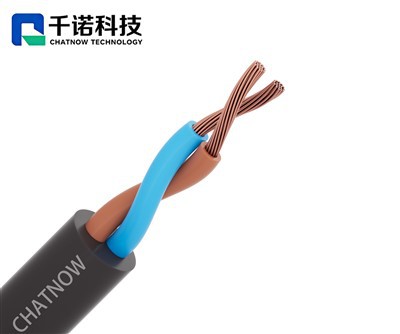
If you need to replace some old connectors, upgrade your bus’s wiring, or just have questions about what you need, hit us up to chat. We’re here to make sure your bus runs smooth, no matter what the road throws at it.
Fire Protection Cable REFERENCES
Automotive Industrial Connectors Handbook. SAE International, 2021.
Bus Wiring Systems: Design, Installation, and Maintenance Guide. Transit Tech Publications, 2022.
IP Rating Standards for Electrical Connectors. International Electrotechnical Commission (IEC), 2020.
Zhejiang Chatnow New Material Technology Co., Ltd.
Zhejiang Chatnow New Material Technology Co., Ltd. is well-known as one of the leading bus cable manufacturers and suppliers in China, specialized in providing high quality customized service. Please feel free to wholesale high-grade bus cable at competitive price from our factory.
Address: Building 12, No.9 Huajin Road, ZhouWangMiao Town Innovation Center, Haining, Zhejiang 314400
E-mail: info@chatnow-cable.com
WebSite: https://www.chatnow-cable.com/
